
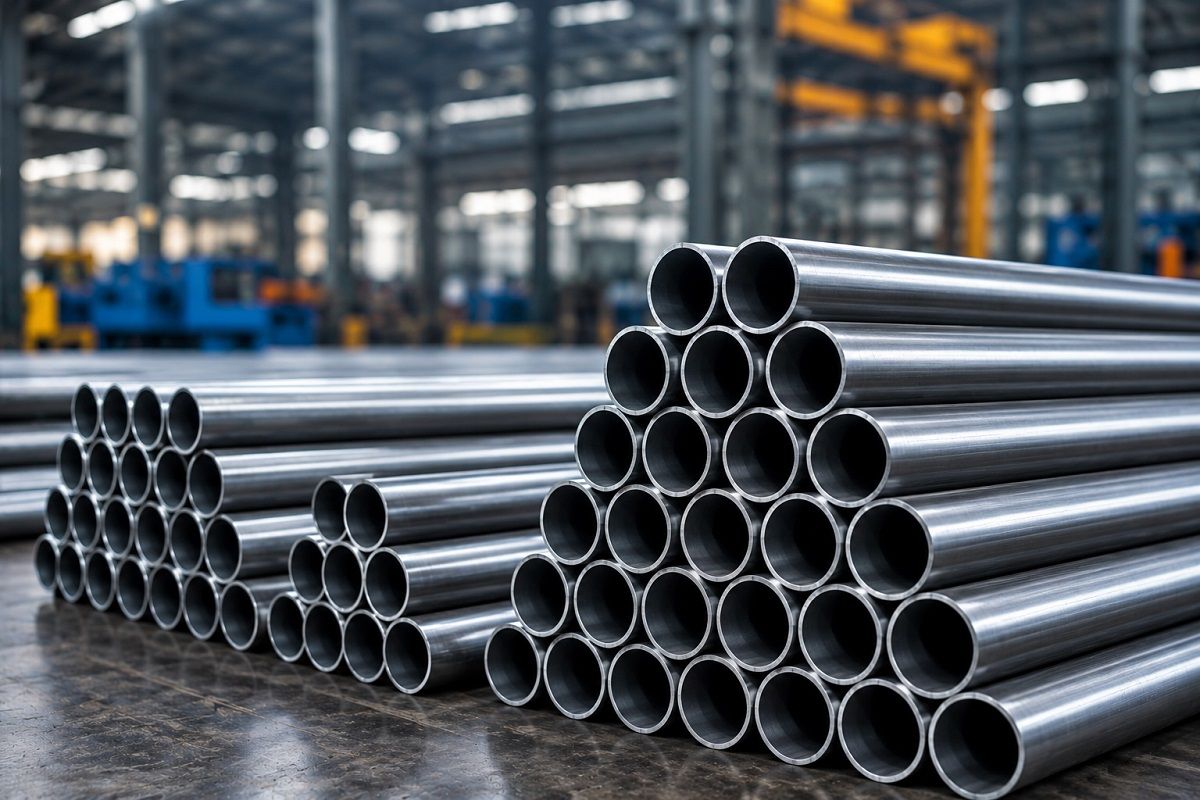
Cold Rolled Steel Tubes are widely used across manufacturing, automotive, construction, engineering, and infrastructure industries due to their superior dimensional accuracy, smooth surface finish, high strength, and excellent weldability. Compared to standard steel products, Cold Rolled Steel Pipes offer enhanced precision and durability, making them ideal for applications where quality, performance, and consistency are essential. Businesses seeking reliable industrial materials often choose products from trusted manufacturers such as Vardhman Steel Tubes for long-term operational efficiency and project success.
The industrial sector relies heavily on high-performance materials that can withstand demanding conditions while delivering consistent results. Among the many steel products available today, Cold Rolled Steel Tubes have gained significant importance because of their precision, strength, and versatility.
From automotive components and industrial machinery to construction frameworks and engineering structures, these tubes play a critical role in modern industrial development. Their ability to provide dimensional consistency and superior mechanical properties makes them a preferred choice for manufacturers, fabricators, and engineers worldwide.
As industries continue to evolve and prioritize quality, Cold Rolled Steel Pipes and tubes remain essential materials for achieving durability, efficiency, and cost-effectiveness. This article explores their benefits, applications, and industrial advantages while highlighting why they continue to drive growth across multiple sectors.
What Are Cold Rolled Steel Tubes?
Cold Rolled Steel Tubes are manufactured through a cold rolling process that improves the steel's surface finish, dimensional accuracy, and mechanical properties.
Unlike hot-rolled products, cold rolling is performed at room temperature, allowing manufacturers to achieve tighter tolerances and enhanced strength characteristics.
The result is a steel tube that offers:
- Superior dimensional precision
- Improved surface quality
- Enhanced mechanical strength
- Better consistency
- Excellent formability
These characteristics make Cold Rolled Steel Tubes suitable for applications requiring high levels of accuracy and reliability.
Why Industries Prefer Cold Rolled Steel Tubes
Modern industries demand materials that can perform under challenging operational conditions while maintaining quality standards.
Cold Rolled Steel Tubes meet these expectations through several key advantages.
High Dimensional Accuracy
Precision is critical in manufacturing and engineering applications.
Cold rolling allows manufacturers to produce tubes with tighter dimensional tolerances, ensuring consistent quality and improved fitment in industrial assemblies.
Benefits include:
- Reduced material wastage
- Faster assembly processes
- Better component compatibility
- Improved production efficiency
Smooth Surface Finish
One of the most noticeable advantages of Cold Rolled Steel Pipes is their smooth and uniform surface finish.
This improves:
- Product appearance
- Coating performance
- Corrosion protection
- Fabrication efficiency
For industries where aesthetics and finishing quality matter, this characteristic provides a significant advantage.
Superior Strength
The cold rolling process enhances the mechanical properties of steel.
As a result, Cold Rolled Steel Tubes offer:
- Higher tensile strength
- Improved hardness
- Better structural integrity
- Greater load-bearing capability
This makes them suitable for demanding industrial environments.
Key Benefits of Cold Rolled Steel Pipes
Excellent Weldability
Cold Rolled Steel Pipes can be welded efficiently without compromising structural performance.
This characteristic makes them ideal for:
- Fabrication projects
- Structural frameworks
- Industrial equipment
- Engineering applications
Better Formability
Manufacturers often require steel products that can be bent, shaped, or fabricated into customized components.
Cold rolled steel provides excellent formability while maintaining strength and dimensional consistency.
Cost-Effective Lifecycle Performance
Although quality steel products may involve an initial investment, their durability and reliability often result in lower maintenance and replacement costs over time.
Businesses benefit from:
- Reduced downtime
- Lower repair expenses
- Extended product lifespan
- Improved return on investment
Major Applications of Cold Rolled Steel Tubes
The versatility of Cold Rolled Steel Tubes allows them to serve a wide range of industries.
Automotive Industry
The automotive sector is one of the largest consumers of cold rolled steel products.
Applications include:
- Vehicle frames
- Structural components
- Seat structures
- Steering systems
- Safety components
Manufacturers value the precision and strength offered by cold rolled steel products.
Construction Industry
Cold Rolled Steel Tubes are widely used in construction projects because they provide structural reliability and long-term durability.
Common applications include:
- Building frameworks
- Support structures
- Architectural components
- Industrial sheds
- Infrastructure projects
Manufacturing Sector
Industrial manufacturers use cold rolled steel products in machinery, equipment frames, and production systems.
Their precision and consistency help improve manufacturing efficiency and product quality.
Engineering Applications
Engineers rely on Cold Rolled Steel Pipes for projects requiring:
- Structural stability
- Precise dimensions
- Long-term performance
- Load-bearing strength
These properties make them suitable for numerous engineering solutions.
Industrial Advantages of Cold Rolled Steel Products
Enhanced Productivity
Precision-engineered steel products reduce errors during fabrication and assembly.
This helps organizations:
- Improve production speed
- Reduce waste
- Enhance product quality
- Lower operational costs
Reliable Performance
Cold rolled steel products perform consistently under demanding conditions, making them ideal for industrial applications where reliability is essential.
Versatile Usage
Their adaptability allows businesses to use them across multiple sectors, including automotive, construction, infrastructure, and manufacturing.
Comparison: Cold Rolled vs. Conventional Steel Products
This comparison demonstrates why industries increasingly prefer cold rolled steel products for critical applications.
Market Trends Driving Demand
Several factors continue to increase demand for Cold Rolled Steel Tubes globally.
Infrastructure Development
Governments and private organizations continue investing in transportation, industrial, and urban development projects.
Automotive Innovation
Modern vehicle designs require lightweight yet strong materials, driving the use of cold rolled steel products.
Manufacturing Expansion
Growing industrialization creates demand for precision-engineered steel solutions.
Sustainable Construction
Steel remains one of the most recyclable materials, supporting environmentally responsible construction practices.
These trends position Cold Rolled Steel Pipes as a valuable material for future industrial growth.
Expert Tips for Selecting Cold Rolled Steel Tubes
Before purchasing steel tubes, consider the following:
Evaluate Quality Standards
Choose products manufactured according to recognized industry specifications.
Assess Application Requirements
Consider load-bearing capacity, environmental conditions, and fabrication needs.
Verify Supplier Expertise
Experienced manufacturers can provide technical support and application guidance.
Focus on Long-Term Value
Evaluate lifecycle performance rather than selecting products based solely on price.
Working with established manufacturers such as Vardhman Steel Tubes can help businesses achieve better outcomes through reliable steel solutions.
Why Quality Matters in Industrial Applications
Industrial projects often operate under demanding conditions where component failure can lead to significant downtime and costs.
High-quality Cold Rolled Steel Tubes provide:
- Consistent performance
- Improved safety
- Reduced maintenance
- Greater operational reliability
This makes quality assurance a critical factor when selecting steel products for industrial applications.
Conclusion
Cold Rolled Steel Tubes have become indispensable across modern industries due to their precision, strength, versatility, and durability. Their superior dimensional accuracy, smooth surface finish, and excellent mechanical properties make them an ideal choice for manufacturing, automotive, construction, engineering, and infrastructure applications.
Similarly, Cold Rolled Steel Pipes offer long-term performance and operational efficiency, helping businesses reduce costs while improving productivity. As industrial demands continue to evolve, these steel products will remain essential for supporting innovation and growth.
Organizations looking for dependable steel solutions can benefit from the expertise and manufacturing capabilities offered by Vardhman Steel Tubes, a trusted name committed to delivering quality steel products for diverse industrial requirements.
Call to Action
Looking for premium Cold Rolled Steel Tubes and Cold Rolled Steel Pipes for your next project?
Contact us today to discuss your requirements and discover the right steel solutions for your industry.
Call now to speak with our experts and receive professional guidance.
Visit us to explore our complete range of precision-engineered steel products designed for industrial success.
FAQs
1. What are Cold Rolled Steel Tubes used for?
Cold Rolled Steel Tubes are commonly used in automotive, construction, manufacturing, engineering, infrastructure, and fabrication applications.
2. Why are Cold Rolled Steel Pipes preferred in industrial projects?
They offer superior dimensional accuracy, smooth surface finish, enhanced strength, and long-term durability.
3. How do Cold Rolled Steel Tubes improve manufacturing efficiency?
Their precise dimensions reduce assembly errors, improve fitment, and minimize material waste.
4. Are Cold Rolled Steel Tubes suitable for construction applications?
Yes. They provide excellent structural strength, durability, and reliability for construction and infrastructure projects.
5. What should I consider when choosing Cold Rolled Steel Pipes?
Focus on product quality, supplier expertise, application requirements, and long-term lifecycle performance.